
“The Labyrinth of the Forever Sick” This four-part narrative series is a visceral exploration of a woman’s navigation through the complexities of emergency medicine, chronic illness, and legislative power. The work tracks a profound transmutation of identity: from the rigid, metallic “Armor” of a first responder to the shattered isolation of a patient battling CRPS (Complex Regional Pain Syndrome)—the “suicide disease.” The journey then ascends into the halls of the Capitol, where the advocate builds a “Statute” of strength from the collective stories of a diverse community. Utilizing acrylic, mosaic, and vintage buttons belonging to my great-aunt, the series illustrates that healing is not a solitary endeavor. Instead, true healing is found when we carry heavy, silenced narratives out of the shadows and into the light of day. The gold leaf woven throughout the series is the conductive thread of this healing; it is the transformative agent that binds our fractures into a presence of authority, proving that once our stories are shared, our scars become our greatest source of light.
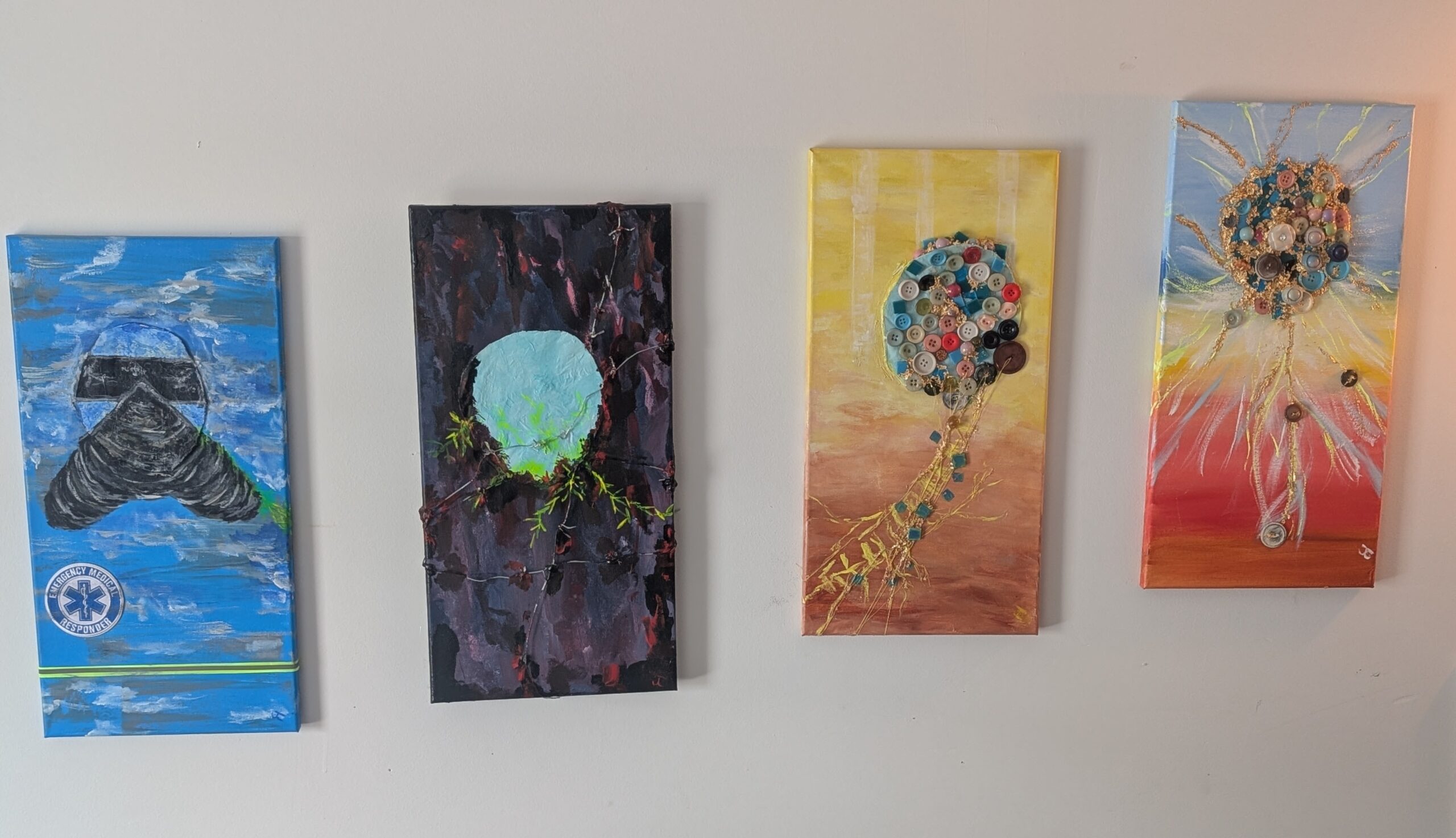
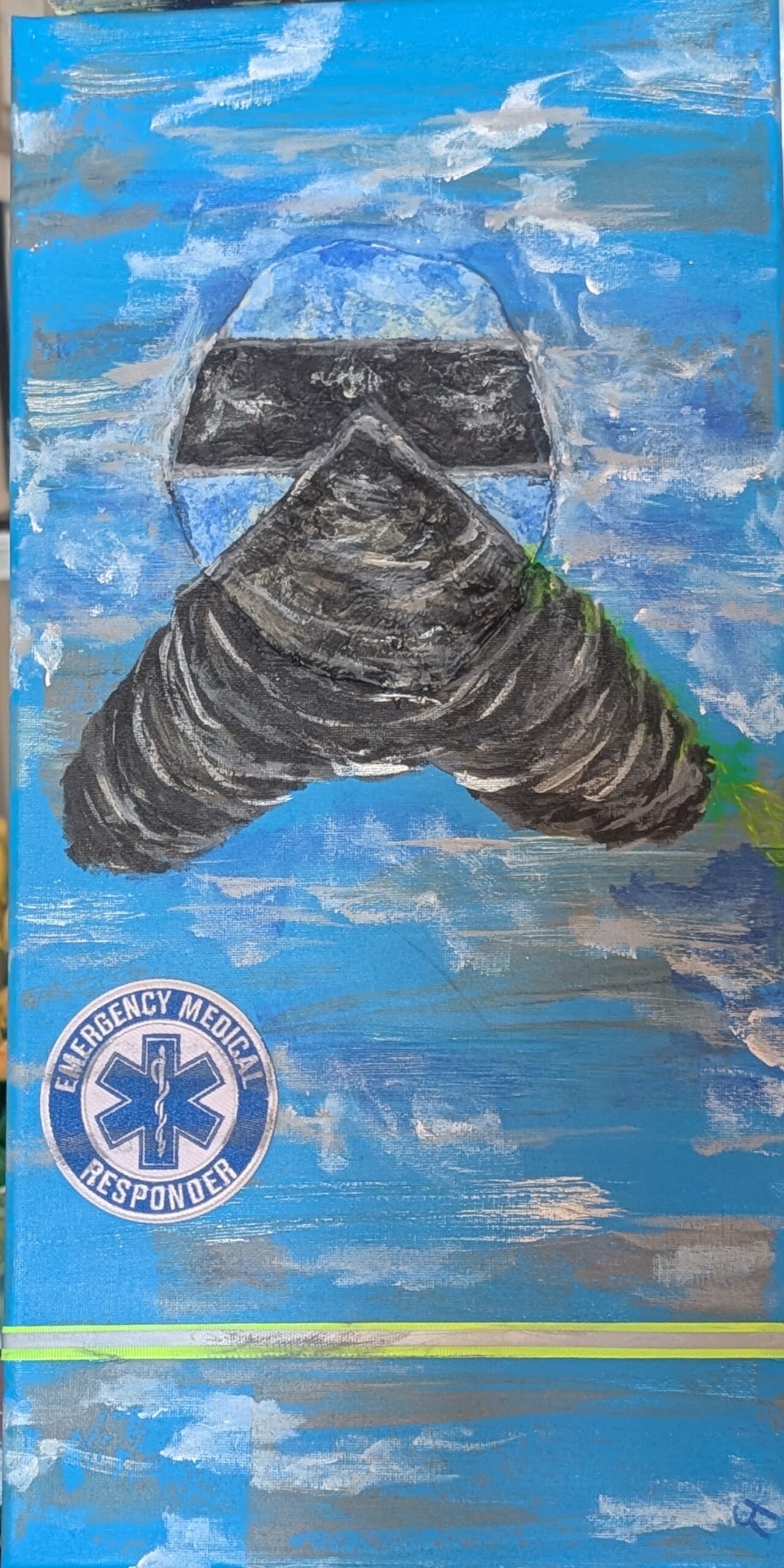
“The Armor of the Invincible.”
“The Armor of the Invincible.” This piece explores the rigid, dehumanizing armor worn by women in emergency medicine. Clad in the cold, metallic textures of a first responder’s respirator, the “mask” serves as a shield against the trauma of the front lines. The invisible hairline fractures at the base foreshadow the coming collapse of the “hero” identity, reminding us that service without self-care is an unsustainable steel cage.
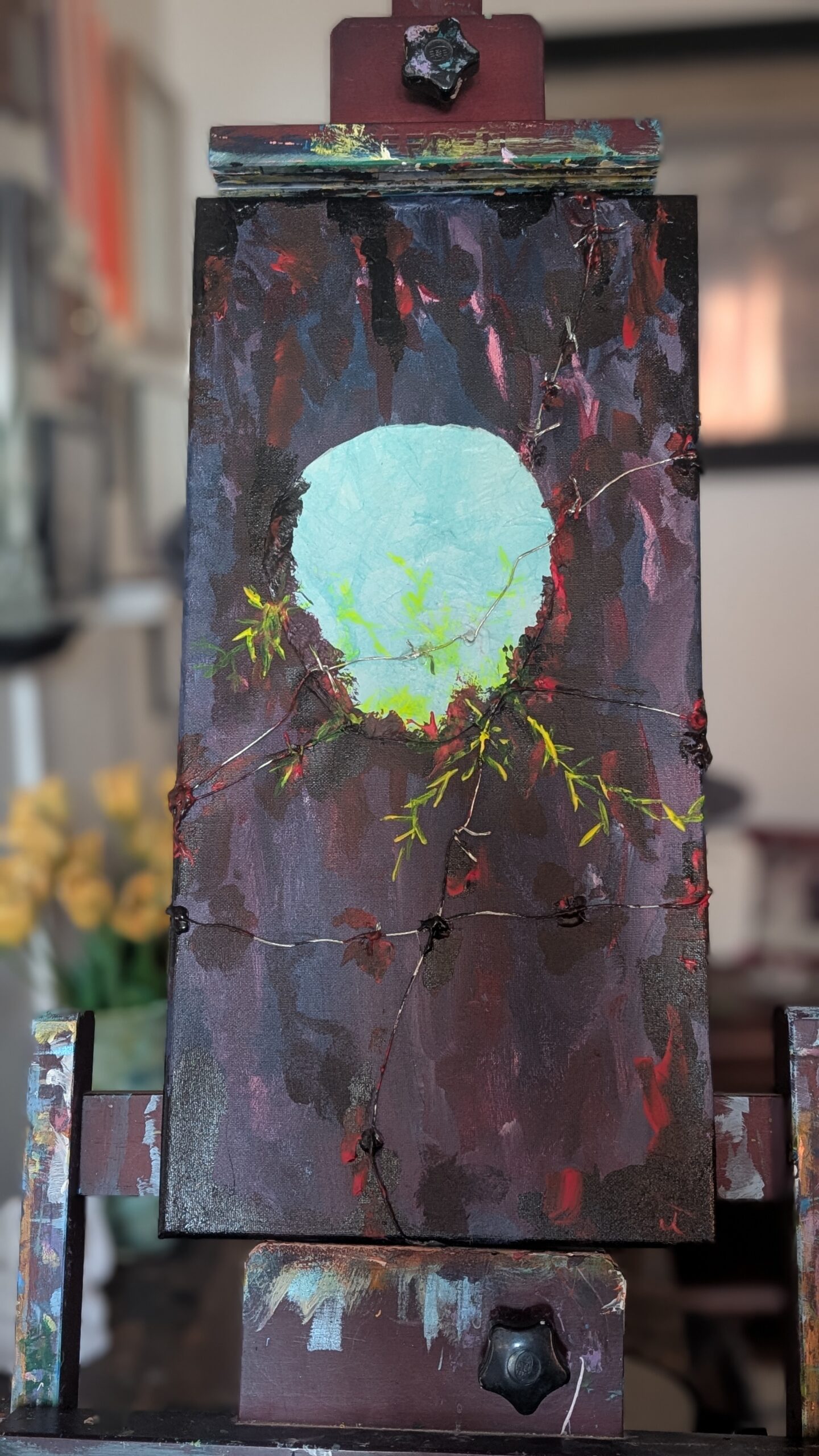
“The Cell”
“The Isolation of the Invisible.” The armor has shattered. Here, the “Patient” is confined within the bruised violets and dark grunge of CRPS (Complex Regional Pain Syndrome). Known to medicine as the most painful condition in existence—often termed the “suicide disease”—CRPS is the invisible cage that defines this phase of the labyrinth. The fragile, sliding porcelain mask and physical wire barriers represent the isolation women face when their suffering is dismissed or “locked away” by a system that cannot see their pain.
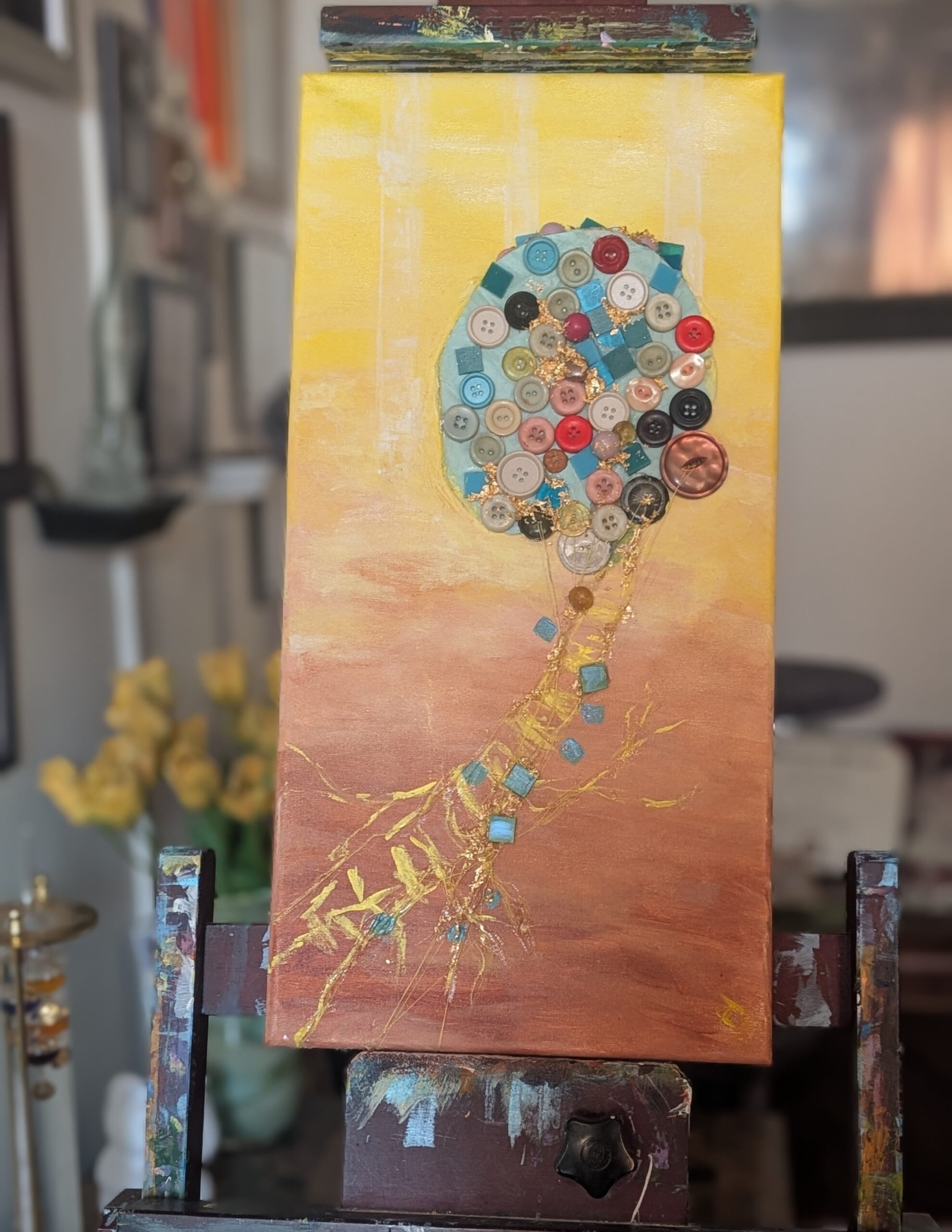
“Statue of Pain”
“The Architect of Advocacy.” In this pivotal piece, the “head” of the advocate is a mosaic of stones and vintage buttons—many belonging to my great-aunt—symbolizing the collective stories and diverse community of lives I carry with me into the Capitol. This work represents a shift in strength: it is no longer just for myself, but a “statute” built to support everyone. The spine is reinforced by the blue stones of my EMT foundation, showing how past trauma is repurposed into a solid structure for legislative change. The gold leaf woven throughout represents the active power of healing. This healing is found by carrying the heavy, often silenced stories of the “forever sick” out of the darkness and into the light of day. The gold is the conductive thread that proves our fractures, once exposed and shared, become our most resilient and authoritative bonds.
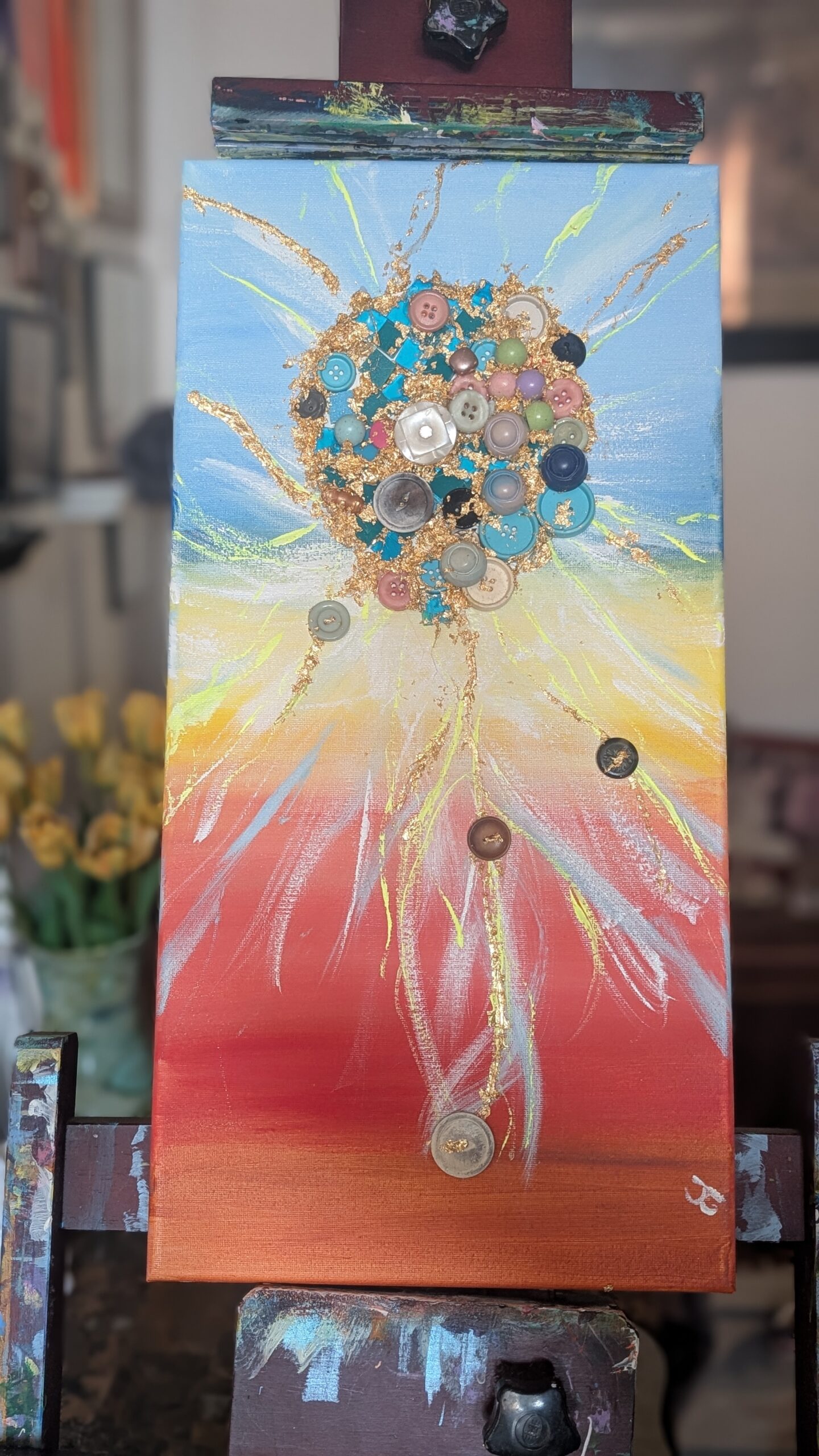
“Phoenix Rising”
“The Wholeness of the Healer.” The series concludes with the “Healer”—a state where the mask is discarded for a radiant, gold-flecked identity. The transition into an expansive sky-blue gradient and the “breaking of the frame” with organic fibers represents the ultimate goal of equality: the freedom to exist in wholeness, moving beyond the limiting labels of “provider” or “patient.” In this final stage, the gold is no longer just filling the cracks of a broken life; it has become the light itself. By bringing the legacy of the women who came before me—symbolized by the sunburst of my great-aunt’s vintage buttons—into the full sun, the “suicide disease” of isolation is transmuted into a sunburst of integration. This is the exhale. The gold proves that when we carry our stories and the stories of others into the light of day, the labyrinth ends. The horizon is finally clear.